
Part 2 of 6 · Body composition
Can You Be Too Fit? When Pursuing Health Becomes Unhealthy
Obesity is not harmless — but more muscle doesn't automatically mean better health either. What the evidence says about both extremes.

Adam James
13 October 2026 · 5 min read
Some things we know are unhealthy
There's considerable debate today about what constitutes a healthy body.
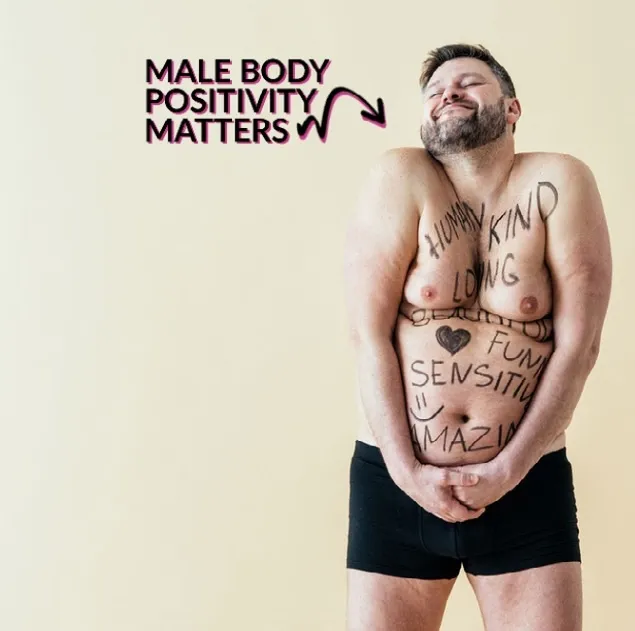
Take the fat acceptance and body positivity movements.
Obesity is NOT medically harmless, and not every body composition carries equivalent health risks.
The scientific evidence does NOT support that being obese is ever healthy.
The US Centers for Disease Control and Prevention identifies obesity as a complex chronic disease associated with increased risks of cardiovascular disease, type 2 diabetes, high blood pressure, certain cancers and premature death.
An individual with obesity might currently have normal blood pressure, cholesterol and blood glucose. That doesn't mean carrying substantial excess body fat presents no additional long-term risk.
There's an important distinction between treating people with respect and refusing to acknowledge uncomfortable medical facts.
We don't help people improve their health by pretending that established health risks don't exist.
But there's another side to this argument.
And it's just as important.
More muscle doesn't necessarily mean better health
If carrying too much body fat is unhealthy, perhaps the solution is to become as lean and muscular as possible.
After all, we tend to associate enormous muscles with extraordinary health.
But is that actually true?
Consider professional bodybuilding.
These men develop astonishing physiques. Their discipline, training intensity and physical development are remarkable.
But extraordinary muscularity doesn't necessarily translate into extraordinary health.
A 2025 study published in the European Heart Journal examined mortality among 20,286 male competitive bodybuilders.
Researchers identified 121 deaths, including 46 classified as sudden cardiac deaths.
Most concerning, professional bodybuilders had approximately 5.2 times the risk of sudden cardiac death compared with amateur competitors.
Available autopsies frequently revealed enlarged hearts and thickened heart muscle.
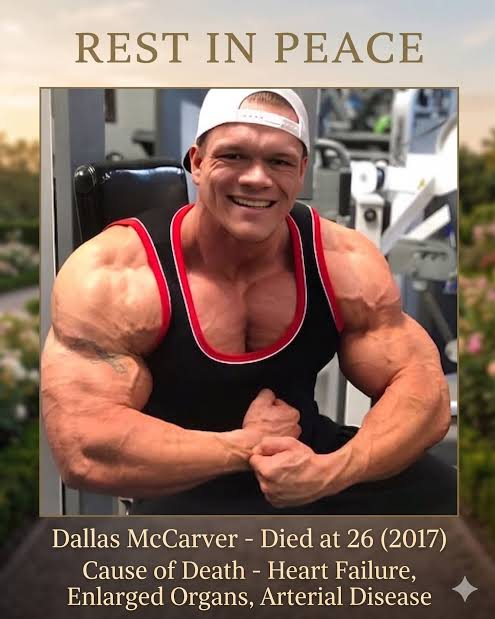
Consider Dallas McCarver, a professional bodybuilder who died at just 26 years old in 2017. His autopsy documented significant cardiac enlargement and other cardiovascular abnormalities.
Or Rich Piana, who died at 46. His autopsy identified an enlarged heart and coronary artery disease, although his precise cause of death was undetermined.
Nevertheless, the broader evidence raises an important question.
At what point does pursuing an extreme physical attribute become detrimental to our overall health?
The same question is relevant to other sports.
An elite powerlifter might possess extraordinary strength without exceptional cardiovascular fitness.
An endurance athlete might be capable of running extraordinary distances while suffering from chronic injuries, inadequate recovery or insufficient energy intake.
A bodybuilder might achieve extremely low body fat for a competition, but that doesn't mean maintaining such a condition indefinitely is healthy.
None of this suggests that strength training or endurance exercise is inherently unhealthy. Both offer substantial benefits.
The distinction is between developing physical capabilities that support health and pursuing competitive extremes that may compromise other aspects of it.
Being the strongest man in the room doesn't necessarily make you the healthiest.
Neither does being the leanest.
Neither does running the fastest marathon.
Health is not about maximising one attribute at the expense of everything else.
It's about finding the balance that produces the best overall health outcomes.
Ready to start?
Set your destination, take the next step, and let other men help you keep going.
Join Fireside HealthImportant: This article is general information, not medical advice. Talk to your GP before making significant changes to your exercise or diet. If you are struggling, in Australia you can call Beyond Blue on 1300 22 4636 or Lifeline on 13 11 14. In an emergency, call 000.
References
- US Centers for Disease Control and Prevention. Adult obesity: causes, consequences and health risks.
- Mortality among 20,286 male competitive bodybuilders (2025). European Heart Journal.