

Measuring progress
Why Measuring Your Waist Matters
Your weight is useful, but it cannot tell you how much is muscle, fat or water, or where your fat is stored. Waist circumference adds an important piece of the picture.

Adam James
20 October 2026 · 3 min read
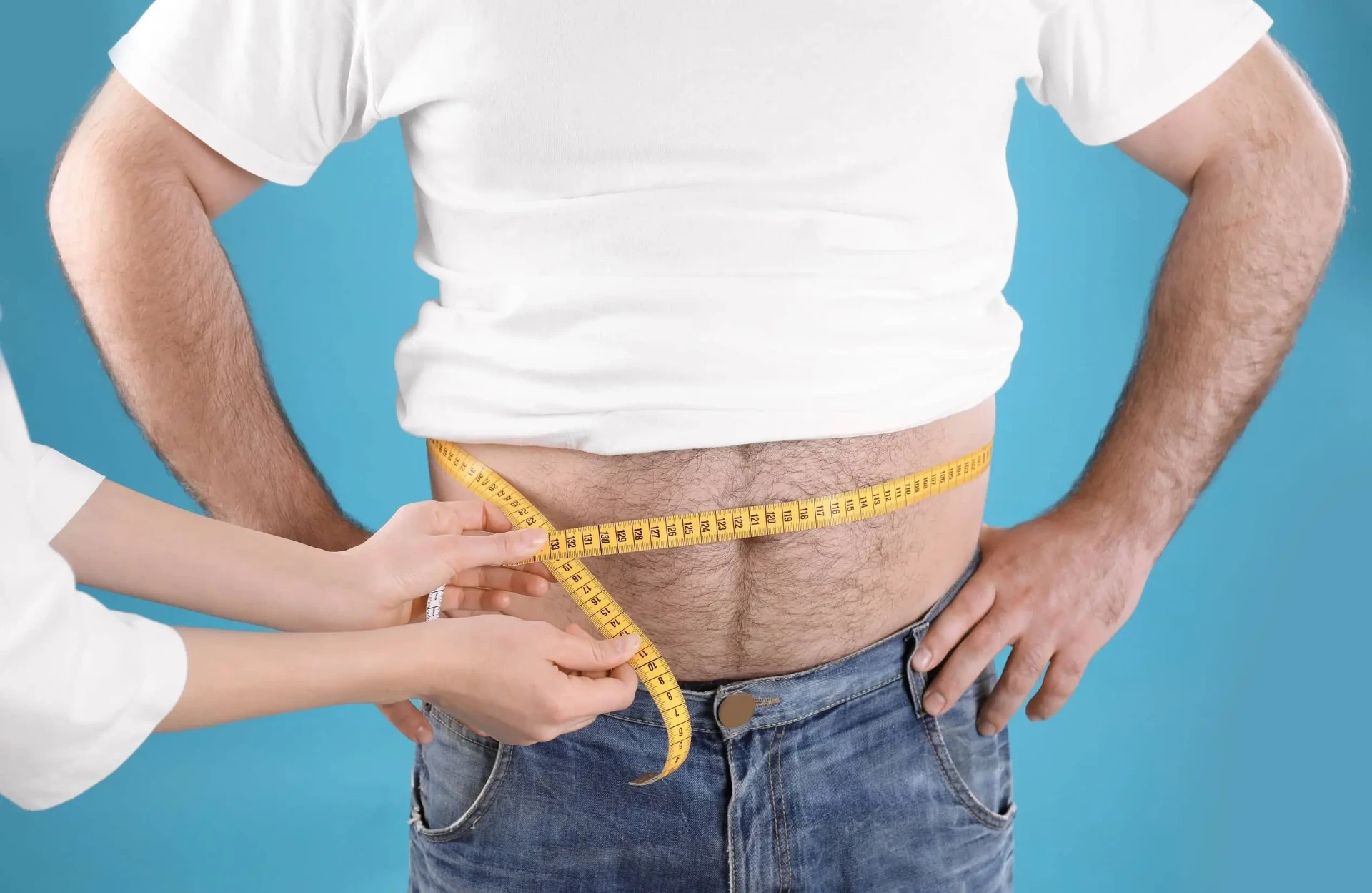
A major goal when improving metabolic health is reducing excess visceral fat: the fat deep inside your abdomen, around your internal organs. Too much is associated with a greater risk of type 2 diabetes and heart disease. Waist circumference is a practical indicator of abdominal fat, although it cannot directly measure fat around or within individual organs.[1]
There will be days when you've stuck to your eating plan, weighed in and seen exactly the same number. Then you measure your waist and it's a little smaller.
If this pattern continues over several weeks, it can indicate fat loss despite little change in weight. If you're strength training, you may be losing fat while maintaining or building muscle. A sustained reduction in waist size can also suggest less visceral fat around your organs. Your health may be improving even when the scales haven't moved.[2, 4]
One day's measurements cannot confirm muscle gain or visceral fat loss. Bloating, fluid shifts and measurement differences can affect the readings, so follow the longer-term trend.
How to measure your waist accurately
Use a flexible tape measure that does not stretch.
- Stand upright with your feet close together and your stomach relaxed.
- Find the bottom of your lowest rib and the top of your hip bone on your side. Measure halfway between these points. Use these landmarks rather than your trouser waistband.
- Wrap the tape around your bare waist. Keep it horizontal all the way around, snug against your skin without pressing into it.
- Breathe out normally, then read the measurement. Do not suck in your stomach or force all the air out.
- Repeat to check you get a similar result, then record it in centimetres.[1, 3]
For consistent comparisons, use the same tape, position and time of day. A weekly measurement, ideally before breakfast, is a practical routine.
At Fireside Health, track your waist alongside your weight. Use both with regular GP checks to build a fuller picture of your progress.
Ready to start?
Set your destination, track your progress, and let other men hold you to it.
Join Fireside HealthSources
- [1] Heart Foundation NZ. Measure your waist.
- [2] Ross R et al. Waist circumference as a vital sign in clinical practice. Nature Reviews Endocrinology (2020).
- [3] NICE. Overweight and obesity management, NG246. Identifying and assessing overweight, obesity and central adiposity.
- [4] Longland TM et al. Higher compared with lower dietary protein during an energy deficit combined with intense exercise promotes greater lean mass gain and fat mass loss a randomized trial. American Journal of Clinical Nutrition (2016).
Fireside Health — Better Men. Better Health. Together.